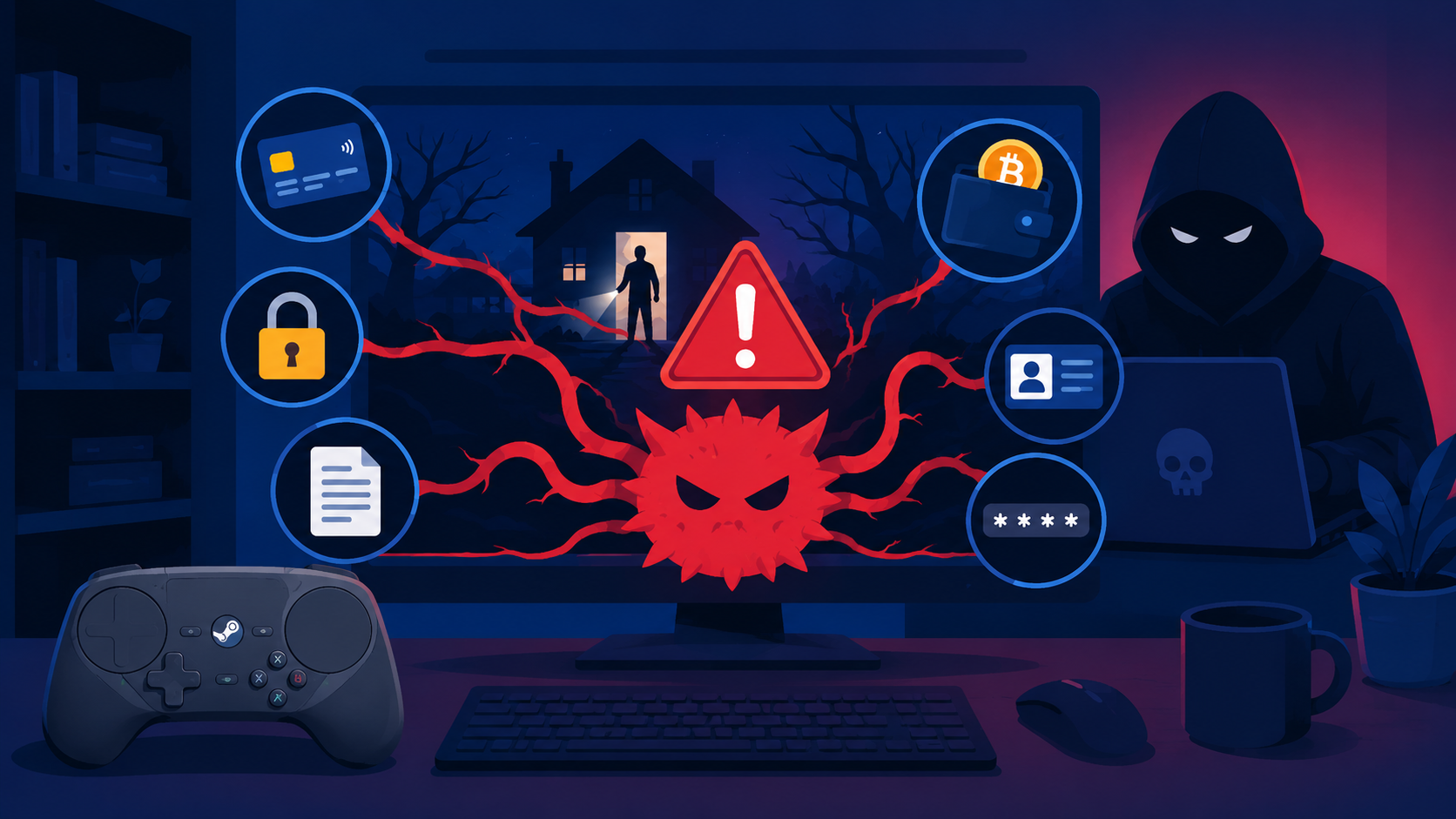
Image source: Competitor Portal / Google News (Used for representation purposes only)
Introduction: When Indie Horror Turns Into a Real Threat
Valve has officially removed an indie horror game from Steam
after cybersecurity analysts at Bitdefender discovered it was quietly pushing info-stealing malware to compromise player data, saved credentials, and crypto wallet extensions. If you recently downloaded experimental or lesser-known free horror titles during recent store sales, you need to take a quick look under your digital hood immediately.
We all love grabbing weird, atmospheric indie projects late at night to get a quick scare with friends. But nobody boots up a game expecting an infostealer payload running in the background while they try to solve puzzles in a dimly lit hallway.
This latest Steam malware alert highlights an alarming tactic where bad actors weaponize legitimate platform storefronts. In my testing of weird indie drops across PC and handheld setups, I always expect clunky physics or unoptimized framerate dips—not an active assault on my browser data.
Deep-Dive: How the Compromised Title Sneaked Past Platform Radar
According to the report from Bitdefender, the threat operated through a stealthy supply chain compromise rather than a direct, overt attack from day one. In many of these incidents, bad actors target a hijacked developer account or slip a malicious update into a title that previously looked completely harmless.
Once installed on your PC rig, the game executable initiated scripts designed to sift through local app data without tripping standard system alarms. The payload specifically targeted browser cookies, autofill records, saved credentials, and crypto wallet extensions stored in Chromium-based browsers.
Video Analysis
The malicious routine worked silently while the game ran. While players were focused on navigating dark corridors and dealing with jump scares, background scripts were busily gathering sensitive system information and preparing to exfiltrate it to remote command servers.
| Target Component | Malware Action | Player Defense Triage |
|---|---|---|
| Browser Data | Harvests cookies, session tokens, and autofill logs | Clear cookies, log out active sessions, reset master passwords |
| Crypto Wallets | Scrapes browser extension directories for private seed data | Transfer assets to hardware cold storage or fresh seed addresses |
| Saved Credentials | Steals Discord, Steam token cache, and email passwords | Enable app-based 2FA / Passkeys across all primary gaming accounts |
Valve acted quickly once threat intelligence teams flagged the anomalous code behavior, completely scrubbing the store page and killing the download packages on the backend servers. But for anyone who already installed the build, the game files might still sit inside your default common library folder.
Impact on Gamers: Immediate Triage Steps for Your PC
If you suspect you downloaded suspect indie horror titles or saw sudden performance drops accompanied by strange network spikes, you cannot simply hit uninstall and call it a day. Infostealers are designed to drop secondary components that persist long after the main game folder is deleted.
- Scan their system thoroughly: Run a complete, offline rootkit and malware pass using dedicated security software alongside standard Windows Defender routines.
- Check active background tasks: Open Task Manager to inspect any unnamed processes or command-line scripts running in the background with elevated CPU or network usage.
- Flush browser data and sessions: Manually invalidate all existing browser tokens by logging out of all active accounts, resetting saved passwords, and clearing cached local application storage.
- Lock down your crypto wallet extensions: If you manage web3 assets or browser extensions, move your balances immediately to fresh hardware-backed wallets.
For PC enthusiasts jumping between living room big-screen setups and gaming handhelds, remember that shared cloud sync and local library transfers can sometimes carry modified launcher files across devices. Keep your operating system security tools updated and avoid sideloading untrusted test builds from unverified forum threads.
Frequently Asked Questions
How did malware end up on an official Steam store page?
Threat actors frequently gain access via phishing campaigns targeting indie creators, resulting in a hijacked developer account that pushes a malicious update over legitimate build branches.
Does simply uninstalling the game remove the threat?
No. Infostealers often extract data instantly and drop secondary scripts into user directory folders. You must perform a deep virus scan and reset all browser-stored passwords.
What data was specifically targeted in this incident?
Security researchers at Bitdefender confirmed the payload focused heavily on browser data, active session cookies, saved credentials, and crypto wallet extensions.
Conclusion: Staying Cautious on Digital Storefronts
While digital storefronts like Steam provide unmatched convenience and massive indie libraries, this Steam malware alert proves that platform verification can occasionally be bypassed by sophisticated bad actors. Taking a few minutes to scan your system and verify your security settings is always worth the peace of mind.
Did you run into any unusual background errors or sketchy indie horror updates recently? Drop your thoughts and experiences in the comments below!
Frequently Asked Questions (FAQ)
Q: How did malware end up on an official Steam store page?
A: Threat actors frequently gain access via phishing campaigns targeting indie creators, resulting in a hijacked developer account that pushes a malicious update over legitimate build branches.
Q: Does simply uninstalling the game remove the threat?
A: No. Infostealers often extract data instantly and drop secondary scripts into user directory folders. You must perform a deep virus scan and reset all browser-stored passwords.
Q: What data was specifically targeted in this incident?
A: Security researchers at Bitdefender confirmed the payload focused heavily on browser data, active session cookies, saved credentials, and crypto wallet extensions.
Published on: 20 August 2026 | Author: Kabir | Context source: Google News
About the Author: Written by Kabir, an avid gamer and game reviewer with 8+ years of experience across PC and console gaming.
Editorial Guidelines:
This post was researched and drafted with AI assistance. It has been reviewed, polished, and verified by our editorial staff for accuracy and first-hand insights.
Comments
Post a Comment