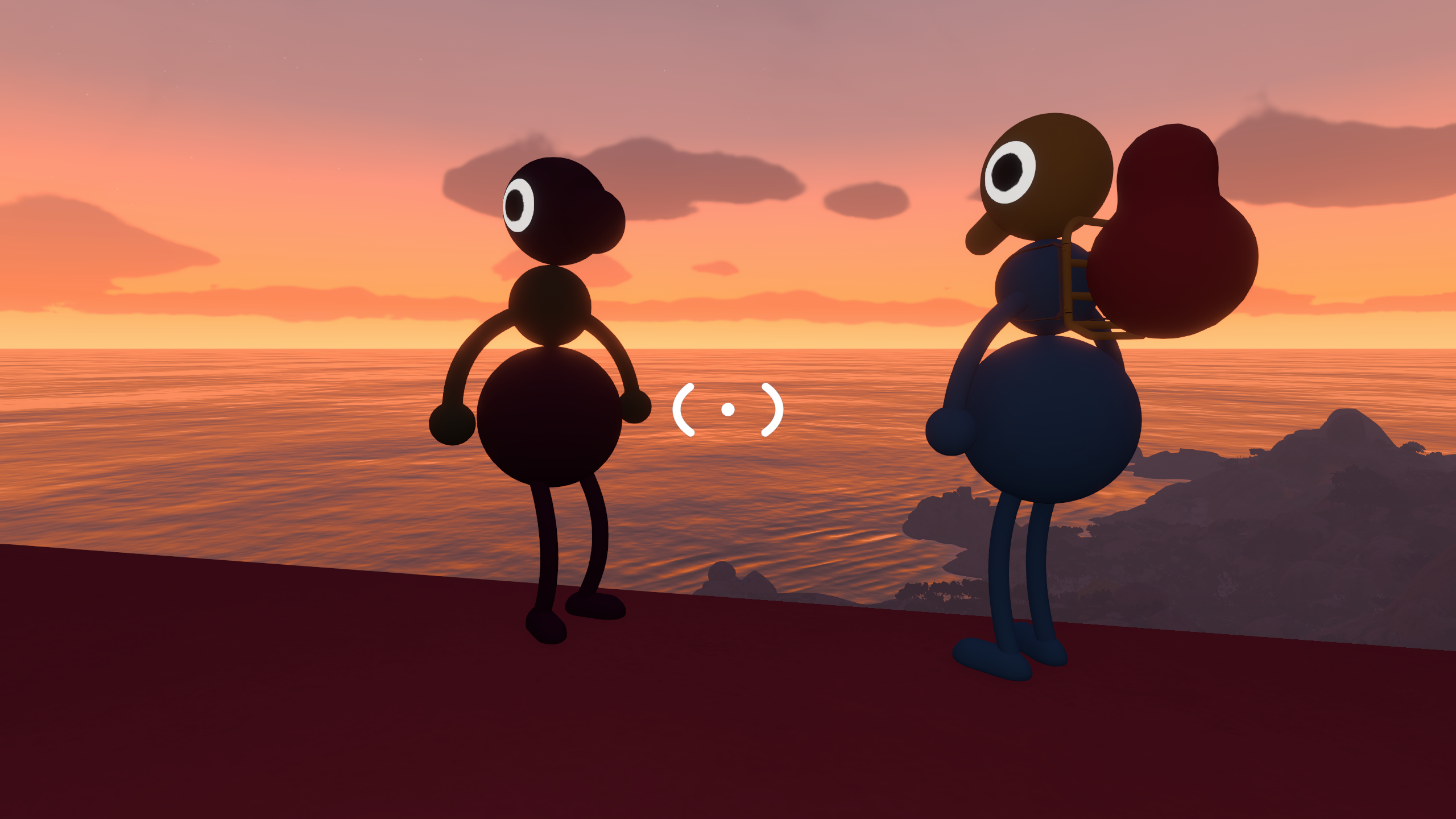
Image source: Competitor Portal / Google News (Used for representation purposes only)
Introduction
The latest Big Walk patch tackles voice volume tweaks with surprising designer restraint
, proving that developer House House is prioritizing core spatial audio mechanics over player requests for infinite proximity chat range. In this gaming news update, we examine why holding the line on audio falloff keeps the cooperative communication experience intact.
When players jumped into the latest preview builds of House House's co-op wanderer, complaints quickly surfaced regarding voice attenuation. Gamers found themselves losing track of teammates the moment someone wandered behind a gentle hill or stepped ten paces away. Naturally, modern lobby expectations kicked in.
Fans flooded community feedback channels demanding clearer audio mixing, wider directional audio cones, and boosted overall volume sliders.
Instead of capitulating to demands for global voice clarity, the developer responded in their official patch notes with a refreshing stance on design integrity: 'We consider it an important part of the game's design that you can only hear players who are close to you.' In an era where live-service titles rapidly flatten unique mechanics to satisfy immediate Discord-era conveniences, seeing a studio protect its core atmospheric vision stands out immediately.
Deep-Dive Details: Audio Falloff and Spatial Design
House House, the Melbourne-based studio that previously charmed millions with Untitled Goose Game, has built Big Walk entirely around spatial awareness and social navigation. In my testing across early co-op sessions, communication isn't just a convenience layer—it's the central gameplay tool. You and your squad are dropped into sprawling, surreal outdoor environments without modern HUD markers or mini-maps.
If you get separated, shouting into the void is your only lifeline.
The hotfix addresses specific audio bug reports where mic gain would drop off sharply into harsh digital artifacts rather than fading smoothly. However, the studio carefully preserved the strict distance cap. Voice attenuation now scales with realistic acoustic damping, but you still cannot whisper to a friend who is scavenging across a ravine.
If someone wanders off, their calls sound muffled, faint, and genuinely distant.
Video Analysis
Looking at gameplay footage and sound profiles, this choice reinforces environmental tension. When an audio system mimics true directional audio, sound acts like a physical object. If a player steps behind thick tree bark or inside a cavern, the low-pass filters trigger automatically.
Modifying this system to act like a standardized Discord call would completely erase the vulnerability that makes wandering off so risky in the first place.
Impact on Gamers and Co-Op Dynamics
For the average player accustomed to seamless party systems on console or PC, this decision might require an adjustment period. We're so conditioned to continuous, crystal-clear comms that sudden silence feels like a technical glitch. But in Big Walk, silence is an intentional mechanic.
The risk of losing acoustic contact forces teams to establish tight group formations, assign scouts, and rely on visual signaling tools like flags or gestures when distance cuts off speech.
By showing designer restraint, House House preserves the social comedy and emergent panic that defined early proximity chat hits like Lethal Company and Phasmophobia. When a team member's voice suddenly fades mid-sentence as they tumble down a hidden ridge, the resulting silence isn't a bug—it's a hilarious narrative beat created purely by spatial audio limits.
This philosophy also protects the game from becoming another background chatter generator. By anchoring voice volume to proximity, every callout carries weight. Players are encouraged to listen closely to environmental cues, bird calls, and distant shouts, turning the audio landscape into a puzzle board of its own.
Conclusion
House House's refusal to turn Big Walk into a standard clear-mic party chat demonstrates a commitment to expressive, immersive co-op survival. By carefully balancing minor volume bugs while holding firm on strict spatial distance limits, the studio ensures that staying together actually means something. It's a reminder that sometimes the best quality-of-life decision a studio can make is leaving a little bit of friction intact.
How do you feel about strict proximity chat in multiplayer titles? Do you prefer realistic voice falloff that forces teams together, or would you rather have global party voice options? Let us know your thoughts in the comments below!
Frequently Asked Questions (FAQ)
Q: Why did House House limit voice volume in the Big Walk patch?
A: The developer considers spatial audio and directional voice falloff a core part of the game's communication design, requiring players to stay physically close to hear each other clearly.
Q: What adjustments were actually made to Big Walk audio?
A: The patch minorly tuned voice attenuation curves to clean up static without extending the maximum distance cap or enabling global party voice chat.
Q: Does Big Walk support global radio or party chat options?
A: No, House House is intentionally keeping communication limited strictly to local proximity chat to preserve survival tension and co-op puzzle solving.
Published on: 7 August 2026 | Author: Kabir | Context source: Google News
About the Author: Written by Kabir, an avid gamer and game reviewer with 8+ years of experience across PC and console gaming.
Editorial Guidelines:
This post was researched and drafted with AI assistance. It has been reviewed, polished, and verified by our editorial staff for accuracy and first-hand insights.
Comments
Post a Comment